




Let’s be honest. When most people think about losing weight, they picture running on a treadmill until their knees hate them, or grinding through HIIT sessions that leave them too sore to walk properly for three days. Sound familiar ?
Swimming : The Exercise That Actually Feels Good
But there’s another option. One that’s been quietly delivering results for decades, without the joint pain, without the dread, and – frankly – with a lot more enjoyment. We’re talking about swimming. If you’re looking for accessible pools and aquatic facilities, resources like https://piscinelozere.com/ show just how widespread and varied swimming options have become. And if you haven’t seriously considered it for your fitness yet, this article might just change your mind.
A Full-Body Workout That Doesn’t Wreck Your Body

Here’s what makes swimming genuinely different from most cardio exercises : the water supports around 90% of your body weight. That’s not a marketing claim – it’s basic physics. When you’re in the pool, your joints are under almost no impact stress. Your hips, your knees, your ankles – they’re all working without taking a beating.
For someone carrying extra weight, this matters a lot. Running with 20 extra kilos on your frame is hard on the body. Swimming with 20 extra kilos ? You barely notice the difference. The water just… takes it.
That’s why swimming is often recommended for people recovering from injuries, for older adults, and for people who are just getting started with exercise. But don’t let that fool you into thinking it’s easy. It’s not. It’s just kind to your body while still being brutally effective.
How Many Calories Does Swimming Actually Burn ?
Okay, let’s talk numbers, because I know that’s what a lot of people want to know.
A moderate-paced freestyle swim for a 75kg person burns roughly 400 to 500 calories per hour. Pick up the pace or throw in some butterfly laps, and you’re looking at 600+ calories. That’s comparable to running – sometimes more – without the pounding.
Breaststroke, which is what most casual swimmers default to, burns slightly less but is still very solid. And it’s sustainable. That’s the key word here. Sustainable.
Because here’s the thing about weight loss that nobody really wants to say out loud : the best exercise is the one you’ll actually keep doing. And people tend to keep doing swimming because it doesn’t hurt, it doesn’t feel like punishment, and – especially in a nice facility – it can actually feel like a treat.
The Afterburn Effect : Your Body Keeps Working After You Get Out

One thing that surprised me when I first dug into the science of swimming is the so-called afterburn effect – or EPOC (Excess Post-exercise Oxygen Consumption, if you want the technical term). After an intense swim session, your body continues burning calories at a higher rate for hours afterward as it recovers.
This isn’t unique to swimming, but swimming does trigger it – especially when you vary your intensity. Alternating between fast lengths and slower recovery lengths (interval training in the pool) seems to amplify this effect quite well.
Swimming Targets Fat, Not Just Calories
Here’s a nuance worth understanding. When you swim at a moderate, sustained pace – think 30 to 45 minutes of continuous movement – your body leans heavily on fat as its primary fuel source. This is because swimming at that kind of aerobic intensity sits squarely in what people call the “fat-burning zone.”
Compare that to very high-intensity land-based exercise, which can tap more into glycogen (carbohydrate stores). For fat loss specifically, that steady, rhythmic swim session is incredibly well-suited.
It Works Your Muscles Too – Don’t Underestimate That
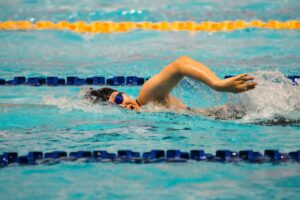
This isn’t just cardio. Every stroke you take is engaging your shoulders, your lats, your core, your glutes, your legs. Swimming builds lean muscle across the whole body, and lean muscle raises your resting metabolic rate. Meaning you burn more calories even when you’re doing nothing. That’s a pretty solid bonus for weight loss.
People who swim regularly often develop noticeably toned upper bodies and strong cores – not because they’re trying to build muscle, but just because swimming naturally works those areas so thoroughly.
Why Most People Quit the Gym But Not the Pool
There’s something psychological about swimming that I find genuinely interesting. Maybe it’s the sensory experience – the sound muffled by water, the rhythm of breathing, the feeling of weightlessness. A lot of swimmers describe it as almost meditative.
Whatever it is, dropout rates for regular swimmers tend to be lower than for gym memberships. People who find a good pool and build a routine around it often stick with it for years. And for weight loss, consistency over months beats intensity over two weeks every single time.
Practical Tips to Get Started Without Feeling Lost

If you’re new to swimming for fitness – not just splashing around on holiday – here are a few things worth knowing :
Start with 20-minute sessions, three times a week. Don’t try to do an hour straight from day one. Your technique will be inefficient at first, and you’ll gas out faster than you expect.
Focus on technique early. Bad technique means you tire quickly and don’t burn as efficiently. Even a few lessons with a coach can make a massive difference.
Mix up your strokes. Freestyle is king for calorie burn, but breaststroke is great for recovery laps. Backstroke helps open up the chest and shoulders. Varying strokes keeps things interesting and works different muscle groups.
Track your distance, not just your time. Seeing yourself go from 20 lengths to 40 lengths over a month is incredibly motivating.
Find a pool you actually enjoy going to. This sounds trivial but it isn’t. A clean, well-maintained facility with decent lane availability makes a real difference to whether you show up consistently.
Is Swimming Alone Enough to Lose Weight ?
Honestly ? It depends on your diet. No exercise programme – not swimming, not running, not CrossFit – will overcome a consistently poor diet. That’s just the reality.
But as the exercise component of a weight loss approach ? Swimming is arguably one of the most complete, sustainable, and accessible options available. It burns calories, builds muscle, protects your joints, reduces stress, and is genuinely enjoyable once you get into it.
If you’ve been looking for a reason to finally give it a proper try – maybe this is it.